
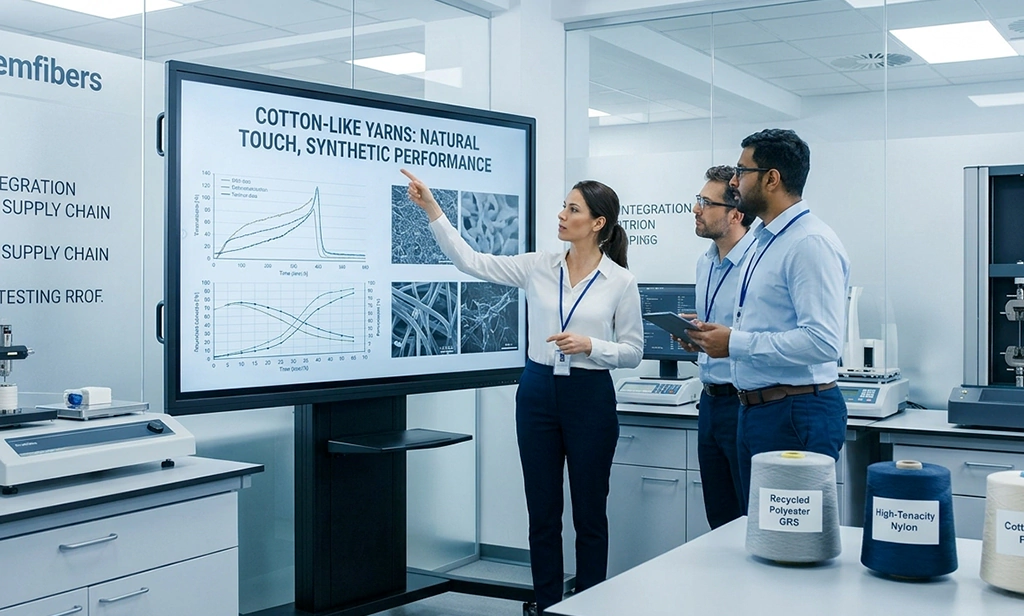
Cotton-Like Yarns: Natural Comfort, Synthetic Power

In the modern textile industry, the holy grail of fiber development has long been the perfect synthesis of nature and technology. Consumers crave the soft, breathable, and skin-friendly touch of organic cotton, yet global brands require the durability, quick-drying properties, and cost-efficiency of synthetic polymers. Cotton-Like Yarns (often referred to as “Cotton-Touch” or “Modified PET”) have emerged as the definitive solution to this market demand.
At Chemfibers, we specialize in the R&D and manufacturing of high-end functional fibers that replicate the micro-structure of natural cotton while leveraging the inherent strengths of polyester and nylon. This guide explores the technical evolution of cotton-like fibers and why they are becoming the preferred choice for global apparel sourcing.
1. The Technology: How Synthetic Becomes “Natural”
The transformation of a smooth, synthetic filament into a yarn with a “cotton-like” hand-feel is a marvel of mechanical and chemical engineering. It is not merely about dulling the luster; it is about re-engineering the fiber’s physical profile.
A. Micro-Crimp and Texturizing
Standard polyester is often characterized by a plastic-like sheen and a slippery feel. To achieve a cotton touch, the yarn undergoes specialized Draw Texturizing (DTY) processes that introduce random, high-frequency micro-crimps. These crimps create tiny air pockets within the yarn, mimicking the bulk and insulation of natural cotton bolls.
B. Differential Shrinkage Technology
By combining two different types of polymers within a single filament, we create a “self-crimping” effect. When exposed to heat, one component shrinks more than the other, causing the fiber to curl and twist. This results in a fabric that is voluminous, soft, and remarkably similar to high-grade Supima cotton.
C. Surface Abrasion and Softening
Advanced finishing techniques allow us to create a “peach-skin” effect. By microscopically roughening the surface of the polyester or nylon filament, we eliminate the synthetic “drag” and replace it with the gentle, fuzzy texture associated with natural fibers.
2. Why Choose Cotton-Like Yarns Over Pure Cotton?
While organic cotton remains a staple, Cotton-Like Synthetic Yarns offer several strategic advantages in the 2026 global supply chain:
- Moisture Management: Unlike natural cotton, which absorbs moisture and stays wet (leading to “chilling” effects), cotton-like polyester wicks moisture to the surface where it evaporates rapidly. This makes it ideal for the “Lifestyle-Performance” crossover market.
- Durability and Shape Retention: Cotton is prone to shrinking, pilling, and losing shape over time. Modified synthetic fibers maintain their dimensional stability even after dozens of industrial wash cycles.
- Color Brilliance: Synthetic fibers accept disperse dyes with much higher intensity and fastness than natural fibers, ensuring that “Deep Navy” or “Jet Black” garments don’t fade into grey.
- Sustainability (Recycled PET): By using GRS-certified recycled polyester chips, we can produce cotton-like yarns that have a significantly lower water and carbon footprint than traditional cotton farming.
3. Key Applications in Modern Apparel
The versatility of Chemfibers’ Cotton-Like Yarns allows them to permeate various high-value sectors:
- Athleisure and Activewear: Providing the look of a casual cotton tee with the sweat-wicking power of a pro-athlete’s jersey.
- Seamless Intimate Apparel: Offering “second-skin” comfort without the irritation often caused by coarse natural fibers.
- Uniforms and Workwear: Combining a professional, natural appearance with the “wash-and-wear” convenience required for high-frequency use.
- Outdoor Gear: Creating lightweight, soft-touch mid-layers that provide warmth without the weight of traditional cotton hoodies.
4. Evaluating Quality: What Sourcing Managers Must Know
When sourcing cotton-like yarns, “softness” is subjective, but “performance” is measurable. At Chemfibers, we encourage our partners to evaluate three critical metrics:
- Pilling Resistance: High-quality cotton-like yarns must be engineered to resist fiber migration, ensuring the fabric looks new for longer.
- Crimp Stability: Ensure the “cotton” texture doesn’t disappear after the first heat-setting or dyeing process.
- Hydrophilic Balance: The yarn should be soft enough to feel like cotton but engineered enough to remain breathable.
5. The Chemfibers Advantage: Innovation in Every Thread
As a premier integrated textile enterprise, Chemfibers doesn’t just manufacture yarn; we engineer solutions. Our in-house R&D integration allows us to customize the “cotton-feel” intensity based on your specific fabric construction. Whether you need a 75D/72F or a custom blend, our laboratory validation ensures that the technical specs match your brand’s quality promise.
Conclusion: The Future is Hybrid
The era of choosing between comfort and performance is over. Cotton-Like Yarns represent the future of textiles—a future where the warmth of nature meets the resilience of science. By integrating these fibers into your collection, you provide your customers with the best of both worlds.
Ready to elevate your fabric touch? Contact the Chemfibers technical team today to request samples of our latest Cotton-Like series and experience the evolution of comfort.
