
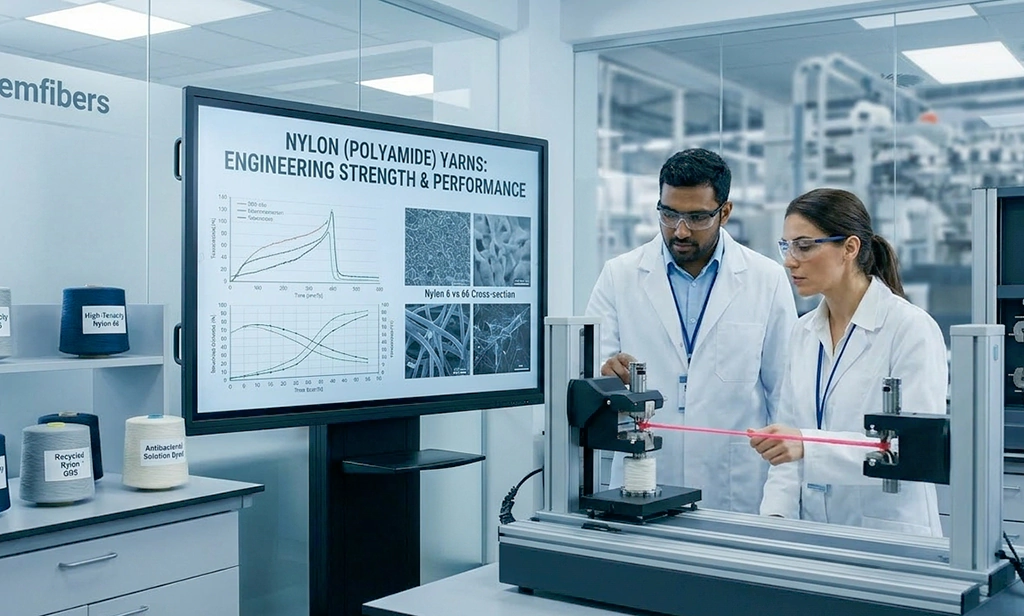
Nylon Yarns: Engineering Strength & Performance

In the hierarchy of synthetic fibers, Nylon (Polyamide) occupies a unique position defined by exceptional mechanical properties and versatility. While polyester dominates commodity markets, nylon is the go-to polymer for applications demanding ultimate tenacity, resilience, and superior hand-feel. For global sourcing managers and product developers, understanding the technical specifications of modified Nylon Yarns is paramount to delivering high-performance textile solutions.
At Chemfibers, we specialize in the engineering and global trade of high-end Nylon (Polyamide) Yarns, bridging the gap between sophisticated material science and reliable supply chain logistics. This guide provides the technical fluency needed to optimize your nylon sourcing strategy for activewear, hosiery, automotive, and industrial textiles.
1. Technical Specifications: Mastering the Polymer Profiles
To source effectively, you must understand the distinction between the two primary commercial grades of nylon. Both are polyamides, but their molecular structures confer subtle differences in performance:
Nylon 6 vs. Nylon 66: Which to Choose?
- Nylon 6 (Polycaprolactam): Known for its brilliant luster, superior dye affinity, and exceptional softness. It has a slightly lower melting point (220°C), which offers energy advantages during dyeing.
- The Choice: Preferred for apparel, intimate apparel, and soft-touch athleisure where comfort and vibrant color are critical.
- Nylon 66 (Polyhexamethylene adipamide): Engineered for ultimate performance. It possesses higher thermal stability (260°C melting point), higher initial tenacity, and superior abrasion resistance.
- The Choice: Critical for specialized sportswear (like outdoor jackets), compression garments, medical textiles, and high-stress industrial applications.
When evaluating a China Nylon Supplier, always confirm whether they control the polymerization process for both grades, ensuring technical consistency.
2. Key Physical Indicators for Quality Evaluation
Functional performance in Nylon Yarns is measurable through three critical technical metrics:
- Tensile Tenacity (cN/dtex): For high-tenacity applications (like industrial sewing or automotive upholstery), tenacity must be verifiable. We provide stress-strain curves to prove our specialized high-performance Nylon 66 meets these extreme requirements.
- Elongation and Recovery: Unlike polyester, nylon exhibits a unique “snap-back” resilience. Quality evaluation involves constant-rate-of-extension (CRE) testing to ensure the elastic modulus remains consistent across different production lots.
- Color Fastness and Solution Dyeing (Solution-Dyed Nylon): The superior hand-feel of nylon is a major pain point if color fastness fails. Solution-dyed nylon—where the masterbatch is embedded in the polymer—eliminates this risk, providing exceptional fastness to light, washing, and friction, crucial for the automotive and contract sectors.
3. Optimizing the Supply Chain: Vertical Integration and Verification
The complexity of manufacturing high-end Nylon Yarns requires a robust quality management system (QMS). When selecting a supply chain partner, look for the following:
A. The Vertical Integration Advantage
Sourcing from traders increases technical risk. An integrated manufacturer like Chemfibers, which controls the process from polymer chips to final winding, guarantees that a slight change in texturizing temperature doesn’t alter the elastic profile of an entire batch. Our on-site R&D capabilities allow us to tailor specifications to your specific loom or knitting machine requirements.
B. Sustainability (GRS Recycled Nylon)
The sustainability specification (recyclability) is no longer a niche requirement for the European and North American markets. Evaluate your supplier on their ability to verify GRS-certified recycled content without sacrificing tensile strength or dyeing uniformity. Recycled nylon from Post-Consumer (PCR) or Post-Industrial (PIR) waste must have a verifiable chain of custody.
C. Logistics and Chemical Compliance (REACH)
Proximity to major global ports like Ningbo and Shanghai minimizes logistical friction and lead times. Furthermore, verify that your Nylon (Polyamide) Yarns are compliant with strict international chemical regulations (REACH/Oeko-Tex), essential for the automotive, medical, and apparel sectors.
Conclusion: Build Your Brand on Technical Trust
The future of high-performance textiles is dependent on differentiated materials. Nylon (Polyamide) Yarns provide the resilience and durability that consumers demand. By focusing on technical specifications, verifiable testing, and supplier consistency, sourcing managers can eliminate hidden costs and build a supply chain defined by trust and engineering excellence.
Partner with Chemfibers. Explore our specialized portfolio of high-tenacity, solution-dyed, and sustainable GRS recycled Nylon 6/66 solutions. Contact our engineering team today to request data sheets or bespoke samples.
